
Technology & Services


Ensure outstanding results
Stay ahead of talent shortages. Upskill your team
Many technology and service companies recognise the prevalent talent shortage in the industry. Traditionally, the response to this challenge has been to prioritise finding new employees, which can often be a daunting and costly endeavor.
However, an alternative and more sustainable approach is to invest in the development of existing employees. By upskilling your current workforce, you ensure that they are equipped with the necessary skills and knowledge to tackle any new challenges that may arise.
This proactive strategy not only addresses immediate talent gaps but also fosters loyalty and commitment among employees, leading to greater retention and overall organisational success in the long run.
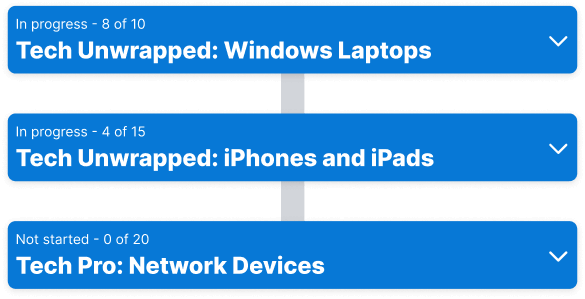
Map out career advancement opportunities
Define career progression through learning pathways, outlining the skills and knowledge necessary for advancement. By establishing these pathways, organisations not only foster continuous learning and skill development but also demonstrate a dedication to supporting employee growth.
At Academy Point, we facilitate the creation and allocation of training pathways, ensuring that all team members are on a journey to enhance and evolve their skills.

Map out career advancement opportunities
Understanding a learner's interests or desired pursuits may not always be apparent. Failing to offer opportunities for learners to explore their interests frequently results in staff turnover.
By providing learners with a comprehensive catalogue of skills pathways, you are giving them the opportunity to pursue their passions and areas of curiosity. This not only enhances their engagement and satisfaction but also fosters a sense of fulfillment and alignment with their career goals.
At Academy Point, we recognise the importance of catering to diverse learner interests and aspirations, providing a platform that empowers individuals to chart their own learning journey and thrive in their roles.

Make it fun
Cultivate a learning culture by making training fun and exciting. Engage your team with interactive and enjoyable training programs that inspire continuous development and foster a passion for growth.
By incorporating game elements like points, badges, and leaderboards, learners are motivated to participate actively and retain information more effectively. At Academy Point, we leverage gamification to make learning enjoyable and impactful, ensuring that your team stays motivated and skilled.
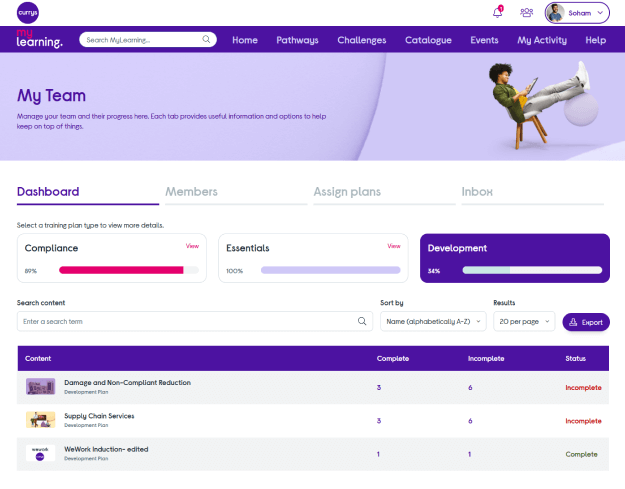
Analytical insights to prove ROI
Leverage our AI driven analytics to monitor and evaluate the effectiveness of your training initiatives. Keep stakeholders updated on program success through comprehensive performance tracking.
FAQ – LMS Technology for IT and Technology Services
1. What is LMS technology and how does it support technology services companies?
LMS technology refers to a digital platform used to deliver, manage and track learning across an organisation. For technology services companies, it supports structured onboarding, technical skills development, compliance training and ongoing professional development across distributed teams.
2. Why do IT services firms need dedicated LMS technology?
IT and technology services firms operate in fast changing environments. LMS technology ensures teams stay current with certifications, product updates, security requirements and regulatory standards. It reduces reliance on informal training and creates consistency across projects and locations.
3. How does LMS technology improve onboarding for technology teams?
LMS technology allows structured learning paths to be assigned by role. New hires can complete technical training, compliance modules and process documentation in a controlled sequence. Progress can be tracked centrally, giving managers visibility without manual follow up.
4. Can LMS technology support compliance and data security training?
Yes. LMS technology enables mandatory compliance training to be assigned, tracked and reported. This is particularly important for technology services organisations handling client data, cybersecurity requirements and industry specific regulations.
5. What features should technology companies look for in LMS technology?
Technology companies should look for role based learning paths, certification tracking, reporting dashboards, integration capability with HR systems, and scalability for multi site or remote teams. The platform should support both technical and behavioural skills development.
6. How does LMS technology help scale growing technology businesses?
As technology businesses grow, informal knowledge transfer breaks down. LMS technology standardises training, preserves institutional knowledge and ensures consistent service delivery across teams. It provides structure without slowing down operational performance.